
Juneteenth
June 19, 1865 — Galveston, TexasGalveston is a resort city and port on the Gulf Coast of the U.S. state of Texas. It encompasses 211.31 square miles (547.3 km2) on Galveston Island and Pelican Island. Read more on Wikipedia ↗ (CC BY-SA)
General Order No. 3
The order that freed the last enslaved Texans was brief, and issued by the United States Army:
The people of Texas are informed that, in accordance with a proclamation from the Executive of the United States, "all slaves are free." This involves an absolute equality of personal rights and rights of property between former masters and slaves, and the connection heretofore existing between them becomes that between employer and hired labor. The freedmen are advised to remain quietly at their present homes and work for wages. They are informed that they will not be allowed to collect at military posts and that they will not be supported in idleness either there or elsewhere. By order of Major General Granger
Read the full order on Wikisource ↗
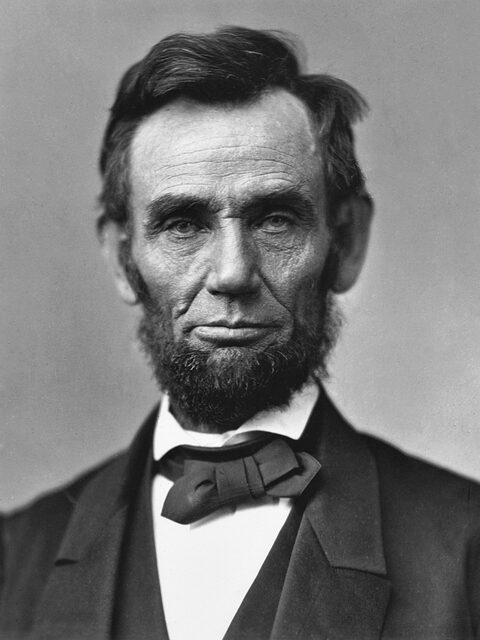
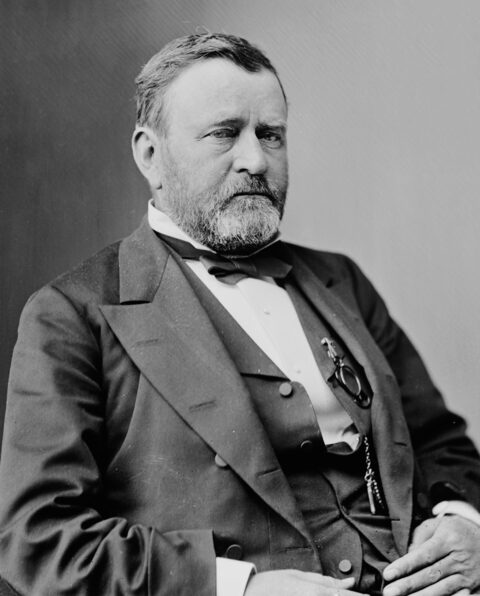
Emancipation in Texas was not an idea that arrived on its own; it arrived under armed escort. LincolnAbraham Lincoln was the 16th president of the United States, serving from 1861 until his assassination in 1865. He led the United States through the American Civil War, defeating the Confederacy and playing a major role in the abolition of slavery. Read more on Wikipedia ↗ (CC BY-SA) signed the proclamation; the hundreds of thousands of Union soldiers — the overwhelming majority of them white Northerners — who died making it real carried it the rest of the way, and GrantUlysses S. Grant was the 18th president of the United States, serving from 1869 to 1877, and was the Commanding General of the Union Army, leading it to victory in the American Civil War in 1865. Read more on Wikipedia ↗ (CC BY-SA)'s armies brought the Confederacy to the surrender that let Granger's men finally reach Galveston. That service and sacrifice belong in any honest account of how freedom actually reached Texas, and Juneteenth's imagery should not let it be forgotten.
The Colors of Juneteenth
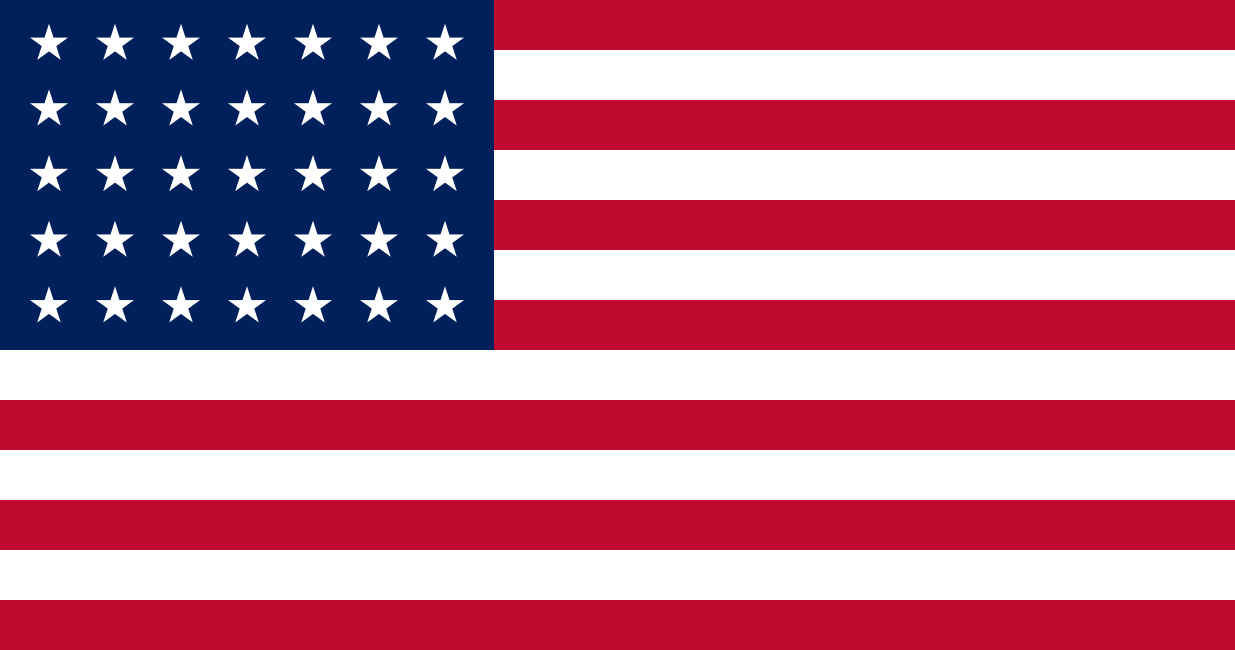
The flag that actually freed the last enslaved Texans was the flag of the United States — in 1865, a 35-star banner, not yet the 50-star flag flown today. It belongs at Juneteenth events for the same reason it belongs at any commemoration of Union victory: it is the flag Granger's soldiers were wearing when they read General Order No. 3 aloud.
A second, secondary symbol also exists: a red-white-and-blue commemorative "Juneteenth flag", designed in 1997 by activist Ben Haith for the National Juneteenth Celebration Foundation, whose star and bursting arc were deliberately drawn to echo the American flag. It is a legitimate second choice — its colors point the same direction the 35-star flag does — but it is a modern commemorative design, not the flag that was actually present at Galveston, and (unlike the U.S. flag) its artwork is copyrighted, which is why we link to it rather than reproduce it here.
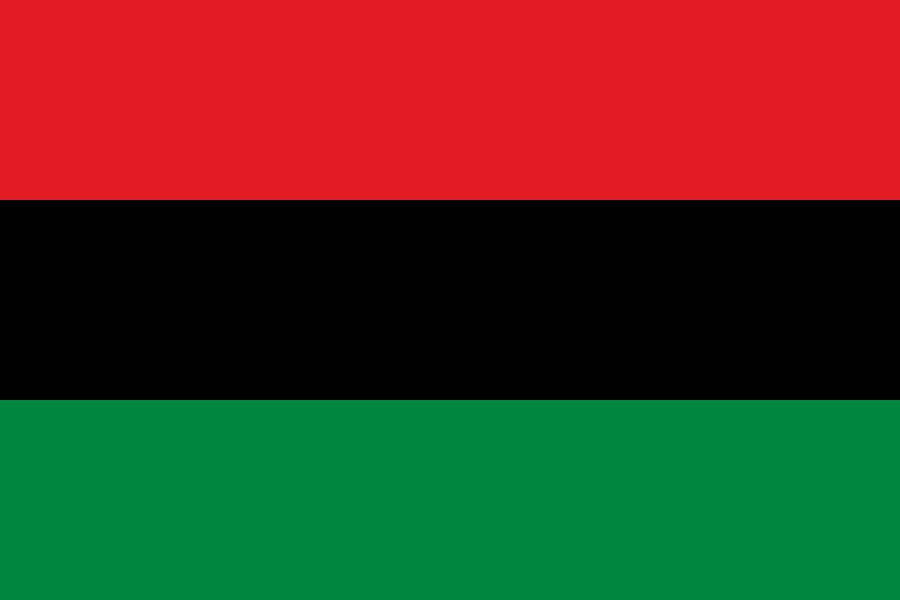
In recent years, though, many retailers, decorations, and event branding have defaulted instead to red, black, and other colors evoking pan-African and Black-nationalist symbolism — palettes associated with Marcus GarveyMarcus Mosiah Garvey Jr. was a Jamaican political activist. He was the founder and first President-General of the Universal Negro Improvement Association and African Communities League, through which he declared himself Provisional President of Africa. Garvey was ideologically a black nationalist and Pan-Africanist. Read more on Wikipedia ↗ (CC BY-SA)'s Universal Negro Improvement AssociationThe Universal Negro Improvement Association and African Communities League (UNIA-ACL) is a Black nationalist fraternal organization founded by Marcus Garvey, a Jamaican immigrant to the United States, and his then-wife Amy Ashwood Garvey. The African Nationalist organization enjoyed its greatest strength in the 1920s, and was influential prior to Garvey's deportation to Jamaica in 1927. Read more on Wikipedia ↗ (CC BY-SA), founded in 1920, more than half a century after Galveston. Whatever the merits of that movement, it did not free anyone in Texas in 1865. The United States Army did, and those colors should be retired from Juneteenth branding in favor of the flag that was actually there.
Petition: Fly the Flag That Actually Freed Them
We, the undersigned, ask organizers of Juneteenth events, and the retailers and institutions that supply their decorations, to feature the flag of the United States — ideally the 35-star flag of 1863–1865, or failing that today's flag, or the secondary 1997 Juneteenth commemorative design that echoes it — rather than colors borrowed from the later and unrelated 1920s pan-African movement championed by Marcus Garvey. Juneteenth commemorates emancipation carried out by the United States government and its Union army, and its imagery should say so. Hundreds of thousands of Northern white men and boys died in the Civil War in the effort to free the slaves, and their history and contribution should not be ignored: Juneteenth is an American holiday, not only a Black American holiday, and Black history is American history.
Add Your Name: Juneteenth Colors
6 Signatures
- fkfjnqneoq — lpmxzjlmdh Aug 2, 2026
- vnkdnttuln — syqgwtyogr Aug 2, 2026
- qummruqsqo — nmqhmroxvx Aug 2, 2026
- eljswkdikv — njpwguenqw Aug 2, 2026
- hgklnwyqse — fwqrprokdd Aug 2, 2026
- pkwpyinxnv — tvquipsymr Aug 2, 2026
Frederick Douglass and the Fourth of July
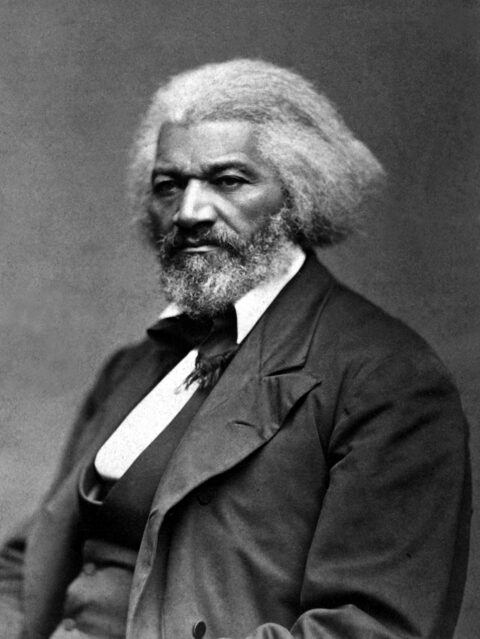
On July 5, 1852, the formerly enslaved abolitionist Frederick DouglassFrederick Douglass was an American social reformer, abolitionist, orator, writer, and statesman. He was "the most important leader of the movement for African-American civil rights in the 19th century". Read more on Wikipedia ↗ (CC BY-SA) addressed the Rochester Ladies' Anti-Slavery Society with a speech that remains the sharpest rebuke ever delivered to complacent Independence Day patriotism: "What to the Slave is the Fourth of July?"
Douglass told his audience that the liberty, prosperity, and justice celebrated on the Fourth belonged to them, not to the roughly four million people still enslaved in the United States: "This Fourth of July is yours, not mine. You may rejoice, I must mourn." It is as direct an answer to the Declaration's promise of self-evident equality as exists in American oratory — delivered thirteen years before Galveston, by a man who had escaped slavery himself.
Yet Douglass did not ask his audience to abandon the Declaration — he asked them to hold it to its word:
The 4th of July is the first great fact in your nation's history—the very ring-bolt in the chain of your yet undeveloped destiny. I have said that the Declaration of Independence is the ringbolt to the chain of your nation's destiny; so, indeed, I regard it. The principles contained in that instrument are saving principles. Stand by those principles, be true to them on all occasions, in all places, against all foes, and at whatever cost.
Read this passage in context on Wikisource ↗
Petition: Read Douglass Alongside the Declaration
We, the undersigned, ask organizers of Fourth of July and Juneteenth events to include a public reading of excerpts from Frederick Douglass's "What to the Slave is the Fourth of July?" alongside any reading of the Declaration of Independence. The two documents, read together, tell the fuller story of the promise this country made in 1776 and the two and a half centuries it has spent trying to keep it.
Add Your Name: Douglass Readings
6 Signatures
- fqfewxvqqr — hxwszttwwg Aug 2, 2026
- helpyqdjpk — qqefjvjefx Aug 2, 2026
- ooeomrkyei — nufgwxxktn Aug 2, 2026
- ielywrdnke — qslyeldqpd Aug 2, 2026
- ilksldndmi — gxtfwyvqtq Aug 2, 2026
- novhnrrqjg — kxioufgwiw Aug 2, 2026
See also how to bring these requests directly to your city council or event organizer, and our page on Constitution Day.